


Have you ever noticed a little sign on a studio door: “Please do not disturb, Designer in their natural habitat”?
It’s funny, but it hides a deeper truth: creativity is fragile.
A harsh comment, an endless feedback loop, or a tactless exchange—all of these can drain a designer’s energy to create their best work.
Almost everyone in the creative industry has seen designers stuck in cycles of client feedback. Sometimes the comments are valid, but often they’re blunt and lacking tact. As a result, a piece of work made with passion can become the very reason a designer feels hurt, demotivated, or even disheartened.
So how do we nurture and protect creativity—rather than let it be eroded by endless revisions? The answer isn’t to avoid feedback, but to build human understanding, respect for the process, and a shared language that bridges clients, account managers, and designers.
Designers Are Human – And Creativity Is Fragile
A design is not just a file. It’s hours of effort, emotion, and deep concentration. When all of that is reduced to a few blunt words like “ugly” or “not good”, creatives often feel entirely dismissed.
In truth, designers don’t just “make things look nice”—they tell the story of a brand through visuals. To do that well, they need to be respected and treated as collaborators, not mere idea-producing machines.
Respecting a designer’s emotions is the first step to protecting creativity.
Feedback Isn’t the Problem – Delivery Is
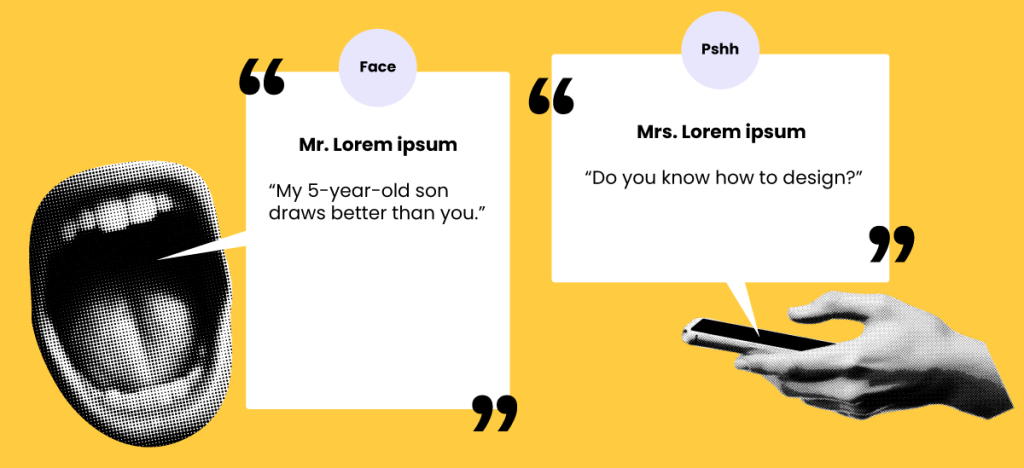
Designers don’t fear revisions, but they dread feedback without structure. Scattered comments, shifting opinions, and contradictory notes easily trap teams in cycles of “rework, then revert to option one.” This not only tests a designer’s patience but also delays projects and wastes resources.
Here, the role of account managers, project managers, or team leads is crucial: they act as translators between clients and designers. Feedback should be consolidated, contradictions filtered, and delivered with care.
When feedback is well-managed, designers see it as new data to solve an old problem—not as a blow to their hard work.
Don’t Let Ego Become a Wall Against Creativity
On the flip side, some designers grow overly defensive, hiding behind theory to reject client feedback outright. But in reality, design has no absolute right or wrong. There are principles, yes, but ultimately, a design must fit the brand, the market, and the target audience.
Protecting designers doesn’t mean shielding them from all conflict. It means equipping them to approach feedback with openness. When they feel respected and supported by a thoughtful buffer, designers are more willing to transform critiques into creative solutions, rather than view them as battles to win or lose.
Ego must be placed in the right context: not to defend the “artwork,” but to elevate the brand’s value.
Conclusion
Protecting designers isn’t about shielding them from clients. It’s about building a healthy workflow where feedback is delivered with care and respect.
Because ultimately, creativity only thrives in safe environments – where designers are valued for who they are. And when designers are protected, it’s the brand itself that reaps the greatest reward.